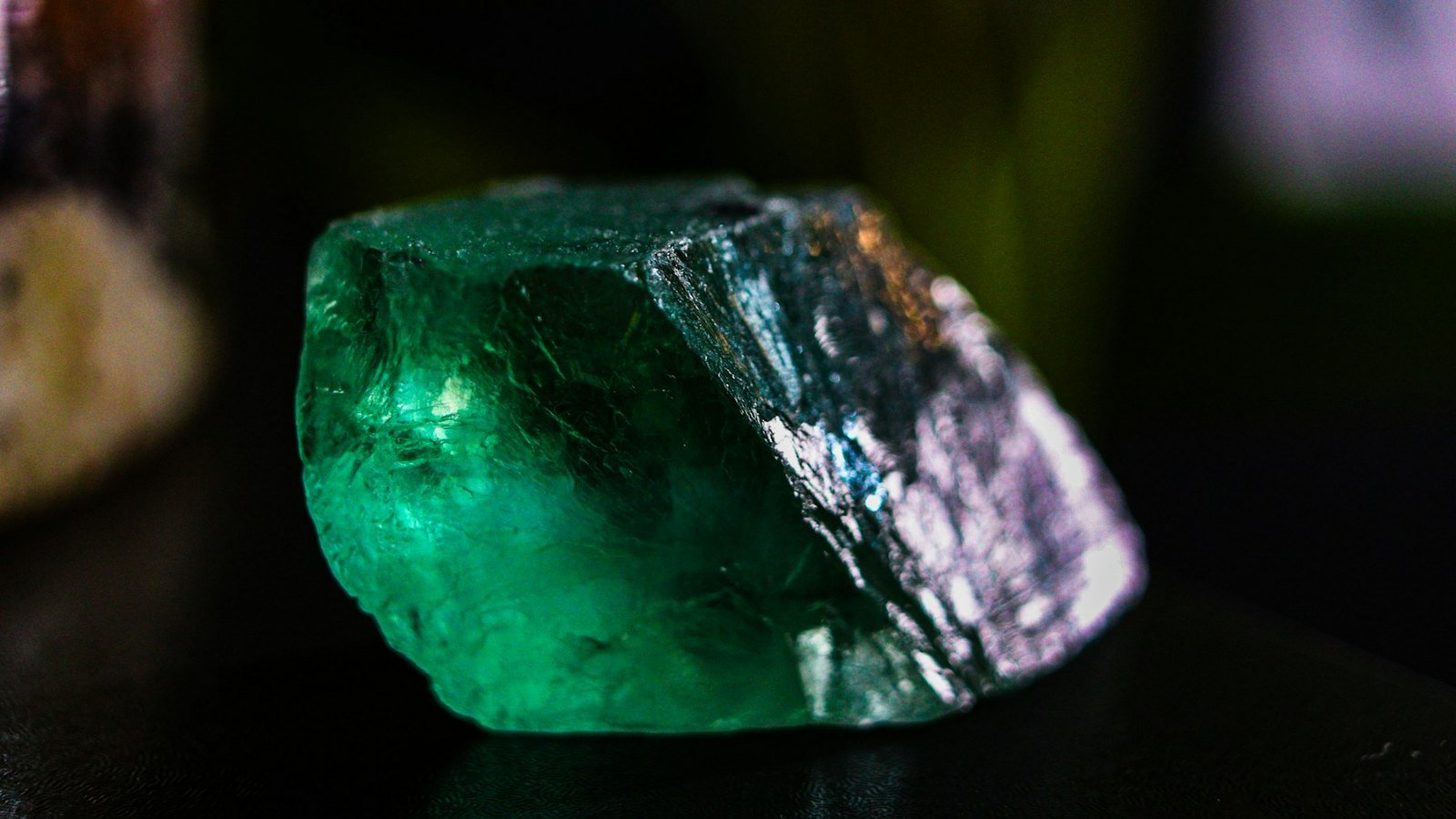
Few gemstones carry as much history as the emerald. Here is a short journey from the deserts of ancient Egypt to the courts of Mughal India, and a few clues to why this green stone has been treasured for so long.
The Emerald Mountain of the Eastern Desert
The Romans knew exactly where to find emeralds: in Egypt’s Eastern Desert, at a place they called Mons Smaragdus, the “Emerald Mountain”. Today the site at Wadi Sikait is nicknamed Cleopatra’s mines. According to a study in Geoscience Canada, it is the oldest known emerald mine in the world. Mining probably began in the Ptolemaic period, but most of the work took place under Roman and Byzantine rule, from the late first century BCE to the sixth century CE. Pliny the Elder wrote about these stones in his Natural History, and the Gemological Institute of America (GIA) notes that Egypt stayed the main source until richer emeralds turned up in Colombia in the 1520s.
A note of caution: the Cleopatra name is more romantic than proven. Researchers from the Sikait Project, who have recorded around 330 underground workings there, report that the area was the Roman world’s only source of emeralds, but scholars treat any personal link to the queen carefully. After centuries of being lost, the mines were rediscovered around 1817 by the French explorer Frédéric Cailliaud.
Mughal emeralds: stones that carried prayers
Under the Mughal emperors, who ruled much of India from 1526, emeralds became both jewels and talismans. Historian Kris Lane describes how fine stones passed between rulers as diplomatic gifts, with gem traders in Goa supplying courts across the region. Skilled lapidaries carved and engraved them. A 17th-century emerald of 85.6 carats in the Dar al-Athar al-Islamiyyah collection in Kuwait is inscribed by hand, using a diamond stylus, with the Throne Verse of the Qur’an.
The largest known example sits in Qatar’s Museum of Islamic Art: a 217.8-carat emerald plaque dated 1695–96, carved with a prayer on one side and a rosette framed by poppies on the other. The museum notes that stones like this were believed to have talismanic powers. In 2001–02, the Metropolitan Museum of Art in New York showed more than 300 Mughal jewelled works from the al-Sabah Collection, introducing a wide audience to this tradition.
Echoes in jewellery today
Those old ideas still shape how emeralds are worn. The broad, confident lines of Roman jewellery can be seen in pieces such as our Natural Emerald Roman Band Ring, while the Mughal love of fine gold work and flowing flowers finds a gentle echo in the Natural Emerald Gold Filigree Ring and the Natural Emerald Floral Bypass Ring. If you would like to see more, you are welcome to browse our emerald rings.
Sources: Geoscience Canada, “Archaeological Geology of the World’s First Emerald Mine”; GIA, “Historical Reading List: The Ancient Emerald Mines of Egypt”; Sikait Project epigraphic report, Zeitschrift für Papyrologie und Epigraphik 223 (2022); Kris Lane, “Emeralds”, in New World Objects of Knowledge (University of London Press); Qatar Museums, “Carved Mughal Emerald” (Museum of Islamic Art); Museum With No Frontiers, “Inscribed emerald” (Dar al-Athar al-Islamiyyah, Kuwait); The Metropolitan Museum of Art press release, “Treasury of the World” (2001).