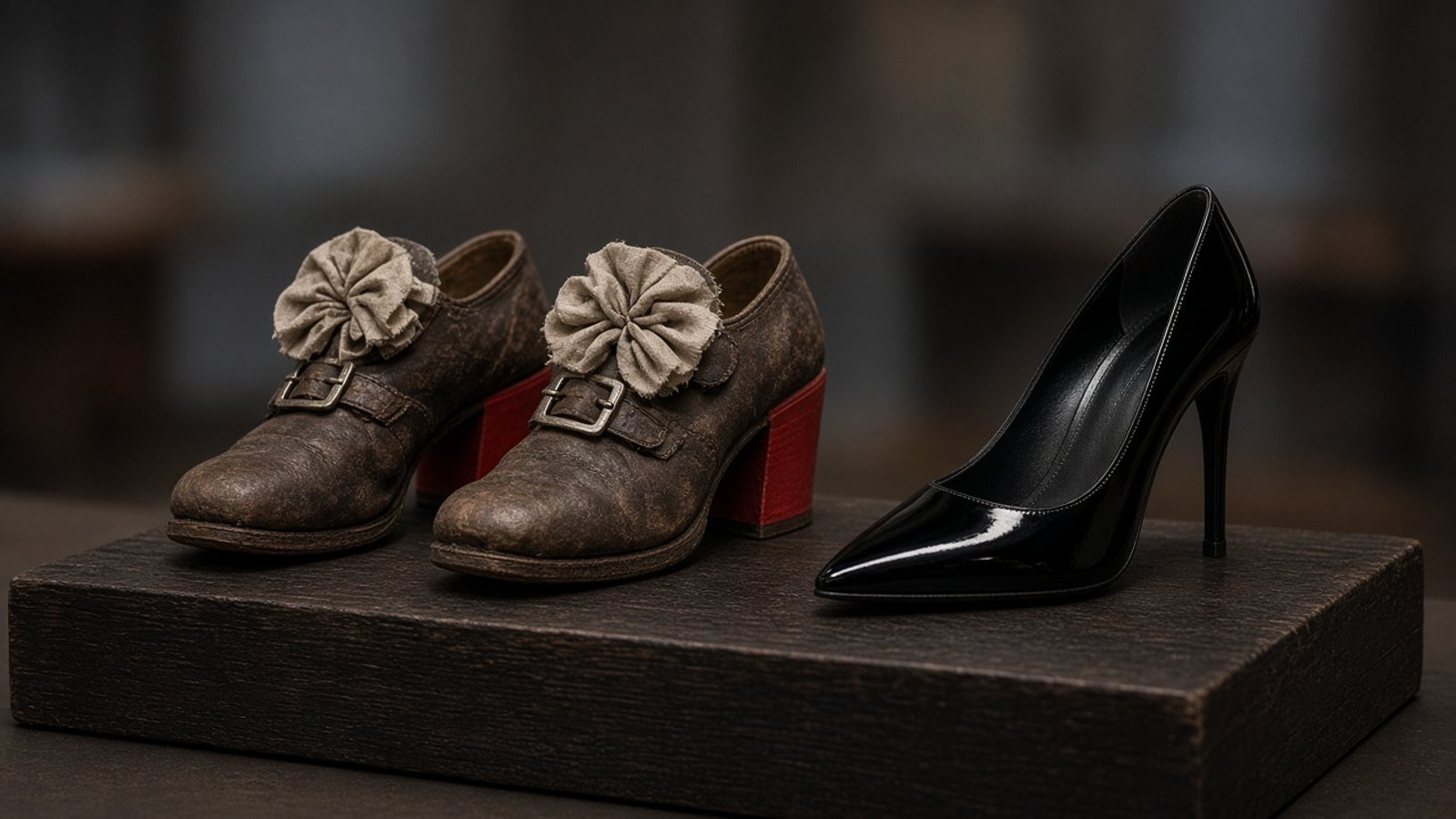
Today the high heel is closely linked with women’s fashion, but for much of its history it was worn by men, and its story begins not in a Paris salon but on horseback.
Riders, stirrups and a Persian origin
According to Elizabeth Semmelhack, senior curator at the Bata Shoe Museum in Toronto, heeled footwear was worn by riders in Persia (modern Iran) for centuries. A heel helped a horseman keep his foot firmly in the stirrup, which mattered when standing up to shoot a bow. Around 1600, as the Persian ruler Shah Abbas I sought allies in Europe, diplomatic contact sparked a European interest in Persian style, and aristocratic men began adopting heels as a sign of manly, military flair, as the BBC reported in its account of Semmelhack’s research.
Red heels at the court of Louis XIV
By the later 17th century the heel had become a mark of rank. France’s Louis XIV wore heels and favoured red heels and soles; historians note that, at his court, the red heel came to signal noble status, with the privilege effectively limited to those in royal favour. Heels were impractical for work, so wearing them showed that one did not need to do manual labour. Women soon followed, and by the early 18th century heels were part of fashionable dress for both sexes.
The fashion then divided. During the Enlightenment, men’s dress moved towards sober, practical clothing, and by around the 1740s men had largely given up high heels, which became associated with women and, increasingly, with frivolity.
From photographs to the stiletto
Heels fell from favour after the French Revolution and returned in the mid-19th century. The Victoria and Albert Museum notes that new manufacturing methods and fashion imagery helped them spread widely. The slim steel-reinforced stiletto arrived in the 1950s, with Parisian designer Roger Vivier, who created shoes for Christian Dior, among those credited with developing it. Since then the heel has risen, fallen and returned with almost every decade.
A good heel draws the eye to the whole outfit, and it pairs naturally with small, bright details, from statement earrings to a red-toned accent such as our ruby rings, or a simple pendant necklace.
Sources: BBC News, “Why did men stop wearing high heels?” (interview with Elizabeth Semmelhack, Bata Shoe Museum); Bata Shoe Museum, Toronto; Victoria and Albert Museum, shoe collection notes.