Tonight is Halloween, and this year 31 October falls on a Saturday. As Vanity Fair Italia points out, many Italians first met the festival of witches and monsters through Hollywood films and American television, yet its roots lie much closer to home for us in Britain and Ireland. Behind the costumes and the sweets is a story that runs from Celtic hilltops to medieval Rome and Victorian America.
From Samhain to All Hallows’ Eve
Most historians trace the night back to Samhain, the Celtic festival that marked the end of the harvest and the start of the dark half of the year. The name comes from Gaelic and is usually translated as “summer’s end”. The Celts believed that on this night the boundary between the living and the dead grew thin, so people lit great bonfires and wore disguises, often made from animal heads and skins, so that wandering spirits would not recognise them.
The Church later placed its own feasts on the same dates. In the eighth century Pope Gregory III moved the celebration of all saints to 1 November, and around the year 1000 2 November became All Souls’ Day. All Saints’ was also called All Hallows, so the evening before became All Hallows’ Eve, and the Scottish contraction “Halloween” is the one that stuck. Vanity Fair Italia also notes an older Roman echo in Pomona, goddess of fruit and seeds, and recalls that 31 October 1517 is the date traditionally given for Martin Luther’s 95 Theses.
Turnips, Jack and trick or treat
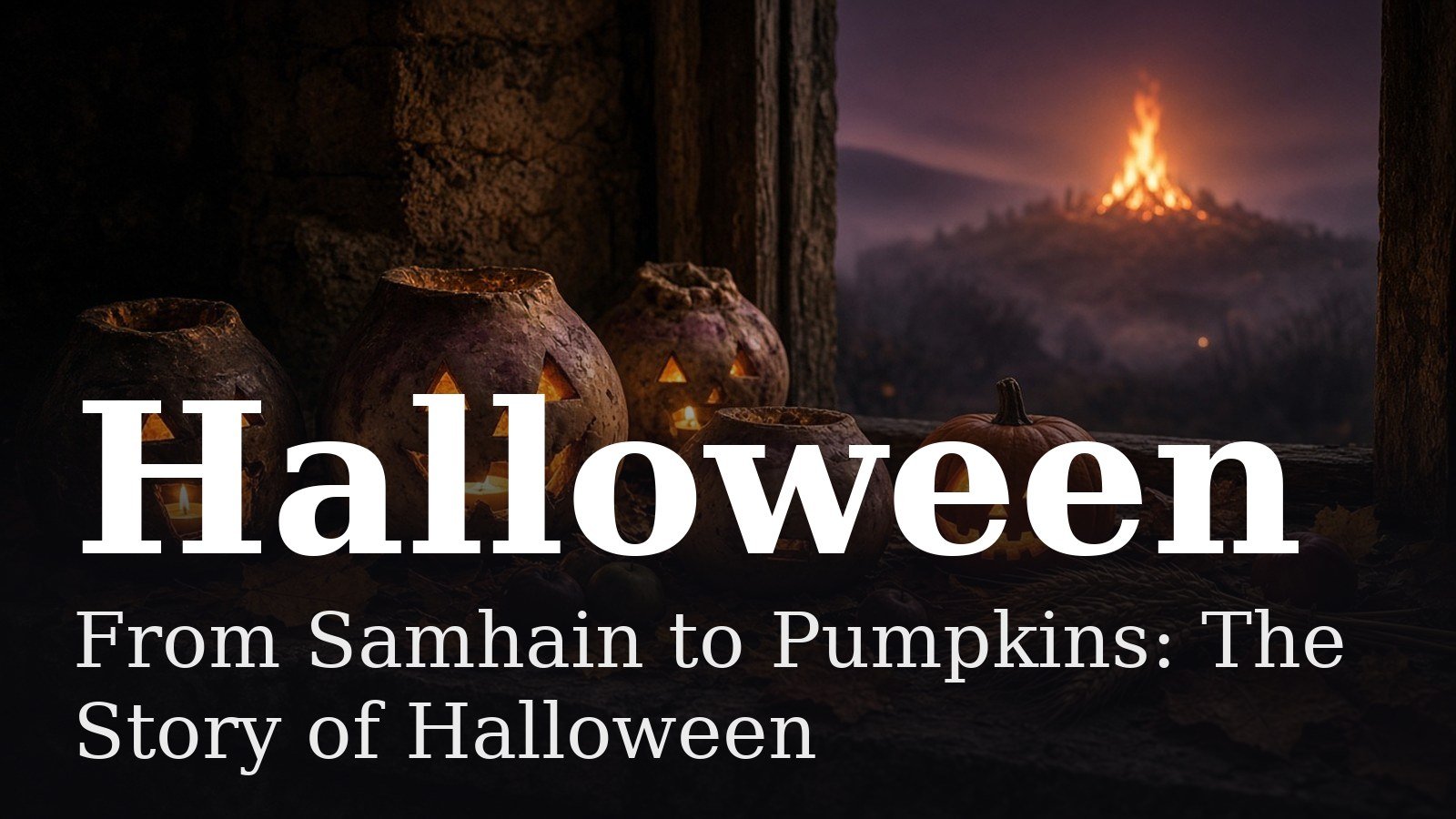
Long before pumpkins, the lanterns were turnips. Irish legend tells of Stingy Jack, a crafty drinker who tricked the Devil and ended up welcome in neither heaven nor hell, left to roam with a single ember glowing inside a hollowed-out turnip. Families in Ireland and Scotland carved faces into turnips, potatoes and beets to keep such spirits away, and in the 19th century Irish emigrants took the custom to the United States, where the native pumpkin proved far easier to carve. Trick or treat grew from the medieval practice of going door to door around All Saints’ and All Souls’, asking for food in exchange for prayers.
A century ago, Vanity Fair Italia adds, American Halloween was more romantic than frightening, a night of party games meant to bring young people together. Today its colours are black, purple and orange, and they translate beautifully into autumn jewellery: deep red garnet rings, violet amethyst pendants and warm citrine earrings, with a compact crossbody bag to keep your hands free for the evening.
Sources: Vanity Fair Italia; HISTORY (A&E Networks); BBC Culture; National Geographic.