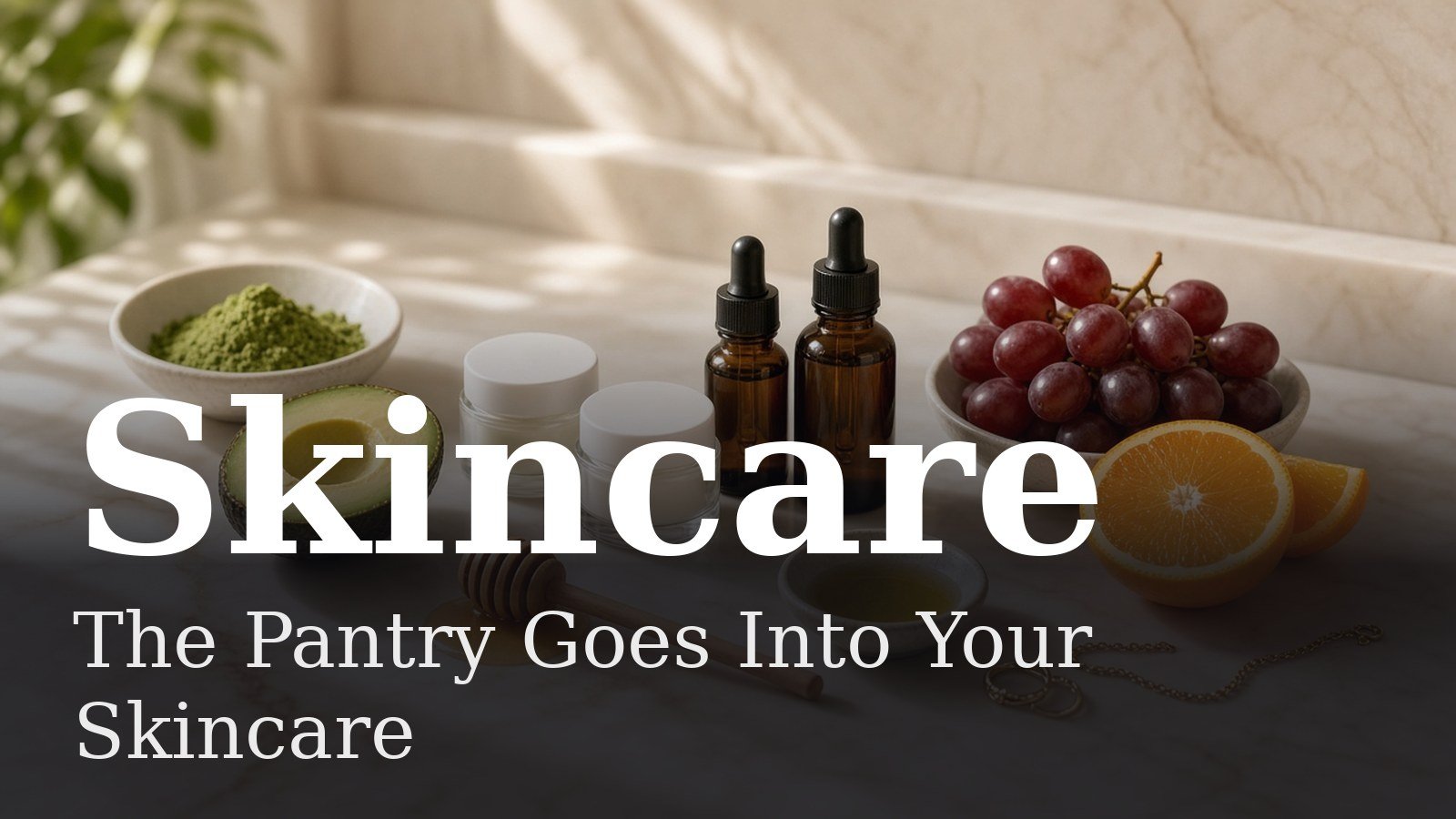
Beauty has been borrowing from the kitchen for a while: dessert-sweet perfumes, packaging that looks like it came from a delicatessen, and adverts styled like pastry workshops. According to a new feature in Vanity Fair Italia, the trend has now moved beyond the look and smell of products and into the formulas themselves, with familiar pantry ingredients turning up more and more on ingredient lists.
From marketing to the formula
The magazine describes a wave of “foodification” in beauty, fed by a wider interest in wellbeing and in what we eat. Formulators are now drawing on actives with long research histories behind them: avocado, matcha, probiotic ferments, honey, oat milk, plant oils, grape derivatives and fruit vitamins. Part of the appeal is psychological. Shoppers tend to assume that something good to eat must also be good for the skin, and brands have noticed.
Dermatologist Corinna Rigoni tells the magazine that polyphenols, found in fruit, vegetables, tea, wine, cocoa and oils, are among the most sought-after of these actives, valued for their antioxidant role and their suitability for most skin types. She also points to vitamin C as one of the best-documented antioxidants in dermatology, with a caveat: it oxidises in light, so it works best in stable formulas and dark packaging, used up quickly.
Honey, oils, grapes and coffee
Cosmetic chemist Umberto Borellini explains that honey has been prized for its moisturising qualities since ancient times, although the version used in creams is purified and stabilised rather than spooned from the jar. Almond, argan, avocado and hemp oils bring antioxidants and vitamin E, while the most valuable part of olive oil for skin care is its unsaponifiable fraction, which helps a dry or stressed skin barrier. Resveratrol from grapes is another popular antioxidant, and caffeine, used in anti-cellulite products for around three decades, now also appears in eye treatments meant to reduce puffiness.
A word of caution
Borellini stresses that the real concern with these ingredients is allergy rather than toxicity. Citrus essential oils, coffee extract and soya can irritate sensitive skin, so a patch test is sensible. He also warns against social media trends that treat food-scented cosmetics as edible: a pretty jar that smells like dessert still belongs out of children’s reach.
A fresh, glowing complexion pairs beautifully with simple, warm jewellery. Try delicate gold earrings, a fine pendant necklace or a stack of slim rings.
Sources: Vanity Fair Italia, Alessandra Paudice, “Menu à la carte, il recupero degli ingredienti alimentari nella skincare” (11 October 2026), with comments from dermatologist Corinna Rigoni and cosmetic chemist Umberto Borellini.